






Introduction
If you’ve been hearing “GEO vs SEO” and thinking suburbs and postcodes, let’s set the record straight. In this guide, GEO stands for generative engine optimisation – the craft of earning visibility, citations, and traffic from AI-driven answer engines like Google’s AI Overviews, Bing Copilot, Perplexity, and other chat-style assistants. The clear benefit for you: more “share of answer” across AI experiences, stronger organic discoverability, and smarter content that converts – without blowing the budget.
We’re folks from the Sharp Instincts team in Melbourne, and we’ve been helping clients navigate the difference between GEO and SEO as AI and personalisation reshape search. Think of SEO as your foundation for classic organic rankings, while GEO marketing explained is how you’re discovered, quoted, and recommended inside generative results. The real play isn’t SEO vs GEO, it’s SEO strategies vs GEO strategies working together so you own both the blue links and the AI answers.
What is GEO Targeting?
When we say GEO targeting in this article, we mean aiming your brand at generative engines and their answer surfaces – not location ads. How GEO targeting differs from SEO comes down to the surface you’re competing on and the “unit” of success. SEO competes for ranked listings; GEO competes for inclusion, citation, and recommendation inside AI-generated answers.
GEO marketing explained in plain English:
- You optimise your site, entities, and brand footprint so AI systems can understand, trust, and cite you.
- You structure content so it’s easy for generative engines to extract steps, facts, and “how-to” guidance.
- You align your facts with the broader knowledge graph (schema, author profiles, business statements) so you’re a reliable source.
GEO targeting examples that actually move the needle: - Build authoritative “About” and “Facts” pages that state canonical information (ABN, services, locations, pricing models, team bios, awards), then back it with structured data and consistent profiles across the web.
- Create answer-first content: concise summaries, bullet steps, definitions, tables, and FAQs. Generative engines adore well-crafted snippets to paraphrase and reference.
- Add solid schema (Organization, LocalBusiness, Service, Product, FAQPage, HowTo, Article) to let crawlers link your content with entities.
- Demonstrate real-world proof: original statistics, case histories, testimonials, photos with EXIF/ALT restraint, and author credentials to support E‑E‑A‑T.
- Keep consistency among footprints (business listings, social profiles, media coverage) to minimise contradictions that lead AI to ignore you.
- Publish Q&A pages that mirror natural-language questions your customers actually ask in chat assistants, e.g., “SEO vs GEO marketing for small businesses – what works faster?”
- Provide “evidence blocks” next to key claims, making it trivial for engines to attribute facts.
In short, GEO vs SEO for local businesses isn’t about maps. It’s about ensuring your brand is eligible to be quoted in AI answers that customers increasingly see before they ever click.
What is SEO?
SEO (search engine optimisation) remains your long-term growth engine for organic traffic. It covers technical optimisation, on-page content, semantic entities, internal linking, and authority building so you rank in classic results and local packs. If you’re comparing SEO vs local SEO, the local flavour emphasises Google Business Profile (GBP), reviews, proximity relevance, and suburb-level pages – still crucial in Australia’s city and regional markets.
Core SEO pillars that now support GEO:
Technical: fast pages, clean IA, error-free crawling, Core Web Vitals, structured data, and canonical discipline.
Content: topic clusters, intent-mapped pages, long-form explainers, and clear answers that double as prompts for AI engines.
Authority: citations, digital PR, relevant backlinks, strong brand signals, and real-world proof.
Local: GBP optimisation, NAP consistency, local service pages with genuine evidence (photos, job stories, local FAQs), and review velocity.
The difference between GEO and SEO is that SEO owns the web page and the ranking; GEO influences the AI-generated summary that may sit above or alongside those results.
GEO vs SEO: Key Differences
Here’s a practical comparison to make the SEO and GEO differences crystal clear.
| Dimension | GEO | SEO |
| Primary Surface | AI Overviews, chat assistants, answer boxes | Organic listings, local pack, Discover |
| Unit of Competition | Citation, inclusion, recommendation | Ranking position, snippets, local pack |
| Time to Impact | Medium: weeks as engines learn/cite you | Medium–long: weeks to months for rankings |
| Content Shape | Answer-first, structured, evidence-backed | Intent-aligned, comprehensive, interlinked |
| Data Signals | Schema, entity consistency, author creds | Technical health, links, content depth |
| Personalisation | High: assistant context, history, location | Moderate: SERP context, location, device |
| Measurement | Share of Answer, citation rate, brand mentions in AI outputs | Rankings, CTR, impressions, conversions |
| Risks | Being un-cited, even if paraphrased; hallucinations; inconsistent facts | Algorithm updates; thin content; crawl waste |
| Cost Profile | Content, schema, knowledge graph work; PR for credibility | Technical fixes, content, link earning |
This table nails the core difference between GEO and SEO: GEO marketing vs SEO marketing is about owning the answer versus owning the listing. In reality, you want both.

When to Use GEO Targeting vs SEO
We guide clients to choose GEO targeting vs SEO based on goals, timing, and the search experience your audience actually sees.
- Need to appear in AI answers soon
○ Use GEO to craft answer-first pages, facts sheets, and FAQ clusters.
○ Standard SEO supports it, but GEO accelerates inclusion in generative results. - Entering a new category or service
○ GEO excels when you need to “educate” engines with good definitions, comparisons, and authoritative sources.
○ Pair with SEO to create topical depth and long-term rankings. - Competing in crowded SERPs
○ Even if ranking is tough, GEO can get you cited in AI Overviews or chat responses.
○ This is where SEO vs GEO for local businesses gets interesting: you might not be Rank 1, but you can still be quoted. - Local presence matters, but assistants dominate
○ Local SEO vs GEO targeting isn’t a fight. Use local SEO to own Maps and calls; use GEO to be named in AI answers like “best emergency plumber near me – who’s reliable?”.
○ Your GBP reviews and consistent facts help both. - Budget and timeline
○ SEO compounds beautifully over time.
○ GEO delivers earlier visibility in AI contexts where classic SEO alone may not reach fast.
○ Smart roadmaps blend both, then scale what’s proving ROI.
Integrating GEO and SEO for Maximum Results
The best strategies for GEO and SEO integration make your content legible to both crawlers and generative engines.
- Build an “Answer Layer” on top of your site
○ Create short, citation-ready answer cards for each key query: definitions, pros/cons, steps, costs, timelines.
○ Add FAQPage and HowTo schema. Link to deeper guides.
○ This is where SEO strategies vs GEO strategies converge. - Strengthen your knowledge graph alignment
○ Use Organization/LocalBusiness schema with sameAs pointing to your verified profiles.
○ Keep brand facts consistent (ABN, addresses, leadership, awards). Engines distrust contradictions. - Design content for extraction
○ Use clear headings, bullet points, tables, and concise summaries.
○ Put numbers in tables and lists so they’re easy to quote. - Elevate authorship and credibility
○ Show author bios, credentials, and role clarity.
○ Add sources and “last reviewed” stamps for sensitive topics. - Close the loop with performance
○ Track share of answer and citation visibility via manual sampling and third‑party tools.
○ Measure downstream: branded search lift, assisted conversions, call volume, demo enquiries. - Respect privacy and transparency
○ Explain how personalisation affects on-site content.
○ Offer opt‑outs and keep to Australian Privacy Principles.
How AI and Personalisation Are Changing Strategies
AI has changed both GEO marketing and SEO marketing by prioritising clarity, credibility, and context.
- Entity-first optimisation
○ Engines map your brand and services to entities. Align your content, schema, and profiles so you’re the canonical source. - Personalised answers
○ Assistants tailor replies by location, past behaviour, and device. Your content must cover variations (e.g., “same-day in Melbourne CBD” vs “next-day in Geelong”). - Conversational intent
○ Queries are longer and more natural. Create content that echoes questions such as “How GEO targeting is different from SEO for a clinic?” and respond in simple terms. - Evidence and explainability
○ AI likes content with simple definitions, steps, and sources. Fluffy, flimsy copy gets overlooked or paraphrased without credit. - Freshness signals
○ Frequent updates, version timestamps, and active GBP profiles aid engines believing in recency.
GEO Targeting Examples
Following are pragmatic GEO targeting examples in the generative sense – not targeting geographies, but answer engines.
- Ecommerce
○ “Which mattress is ideal for side sleepers?” Create a comparison page with a summary table, care information, and returns policy. Add HowTo schema for installation and FAQPage for shipping times.
○ Aim for inclusion in AI Overviews that compare brands and materials. - Professional services
○ “SEO vs GEO marketing for small businesses – what gives faster results?” Publish a decision guide with a 90‑day plan, costs, and expected outcomes.
○ Add pros/cons and a TL;DR block up top for easy extraction. - Trades and home services
○ “Emergency plumber costs after-hours in Melbourne?” Provide a transparent pricing band, service window, and steps to triage before you arrive.
○ Assistants love trustworthy, actionable info – great for citations. - Healthcare and clinics
○ “Physio vs chiro – what’s the difference?” Stick to non‑diagnostic, evidence-based guidance.
○ Strong author bios and references increase your chance of being quoted. - B2B SaaS
○ “Best strategies for GEO and SEO integration?” Publish a technical playbook with architecture diagrams, schema examples, and KPIs.
SEO Strategies That Supercharge GEO
Use these SEO moves to make GEO more effective:
- Topic clusters with answer cards
○ For each hub (e.g., “SEO strategies vs GEO strategies”), add a concise summary box with definitions and takeaways. - Structured data discipline
○ Use Organization, LocalBusiness, Service/Product, Article, FAQPage, and HowTo schema with distinct IDs to avoid ambiguity. - Internal linking with intent
○ Link between answer cards and in-depth guides through anchors such as Local SEO tactics, GEO marketing tips, SEO vs GEO guide, and Digital marketing tactics. - High-quality media and transcripts
○ Host explainery videos and provide complete transcripts. Assistants can pull short quotes if they’re cleanly structured. - Review and reputation signals
○ Encourage reviews and surface them responsibly. Social proof helps both SERPs and assistants.
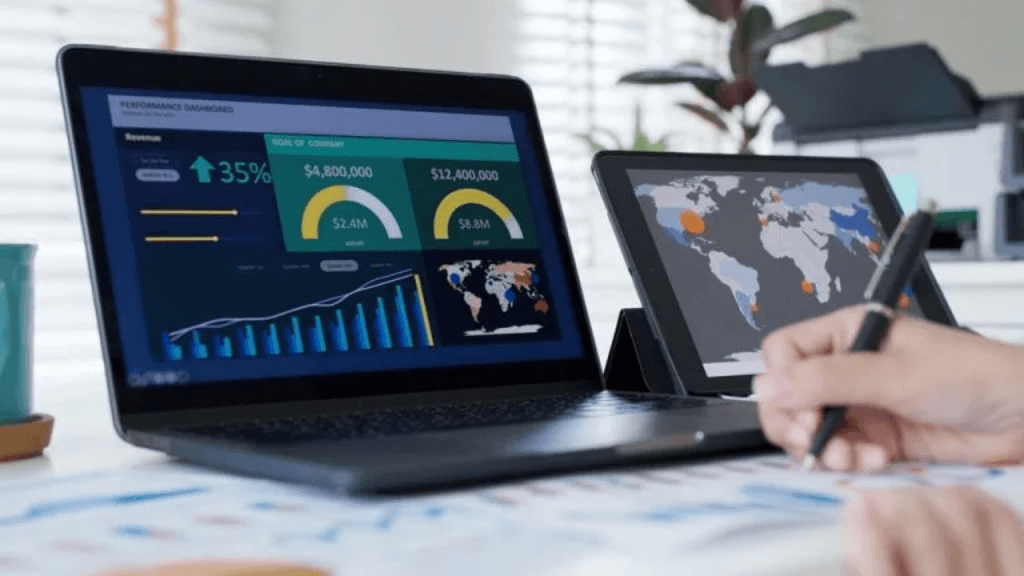
Measurement and KPIs
GEO success requires new – and honest – measurement.
- GEO metrics
○ Share of Answer: how often your brand is cited across a sample of target queries.
○ Citation Quality: presence in top chunks, attribution accuracy, and link inclusion.
○ Downstream Effects: branded search lift, direct traffic trend, enquiry uplift post content updates. - SEO metrics
○ Rankings by intent cluster, impressions, CTR, local pack share, GBP interactions (calls, directions), and organic conversions. - Cross‑channel rollup
○ Blended CAC and MER by intent, not just channel.
○ Assisted conversions where organic content softens the path to paid.
Common Mistakes to Avoid
- Confusing GEO with geographic targeting
○ GEO here is generative engine optimisation. Keep your playbook focused on answer engines. - Publishing fluffy, AI‑generated filler
○ Generative engines won’t cite bland copy. Prioritise original insights, data, and practical steps. - Inconsistent facts across the web
○ Mismatched addresses, prices, or claims erode trust and reduce citations. - Neglecting authorship and review
○ No author, no credentials, no timestamps – expect fewer inclusions for sensitive topics. - Ignoring answer shape
○ Walls of text don’t get quoted. Use headings, bullets, tables, and TL;DRs.
30/60/90‑Day Action Plan
- Days 1–30: Foundations
○ Audit technical SEO and schema coverage.
○ Map priority queries that appear in AI Overviews and assistants.
○ Draft answer cards and FAQs for “Difference between GEO and SEO,” “GEO vs SEO for local businesses,” and “SEO vs local SEO.”
○ Standardise brand facts across site and profiles. - Days 31–60: Build the Answer Layer
○ Ship FAQPage and HowTo schema; publish decision guides (GEO marketing vs SEO marketing).
○ Add author bios and review timestamps on key pages.
○ Start measuring Share of Answer on a sample of questions and with manual validation. - Days 61–90: Scale and Integrate
○ Elaborate topic clusters via comparison tables and evidence blocks.
○ Use PR and thought leadership to generate authoritative cites that the assistants can reference.
○ Tune internal linking to push authority into answer-rich pages.
GEO marketing vs SEO marketing: Small Business Lens
For small businesses, GEO vs SEO for local businesses is all about sequencing. Use SEO to get your foundations right – site speed, service pages, GBP, reviews. Layer GEO to be named in AI answers that customers now see before they click. The benefit is twofold: you capture attention in generative summaries and still convert with well‑optimised pages when users click through. That’s Understanding GEO marketing and SEO benefits in real life.
Internal Linking Anchor Texts
Use these anchors across your site for stronger relevance and cleaner journeys:
- Local SEO strategies
- GEO marketing tips
- SEO vs GEO guide
- Digital marketing strategies
Calls to Action
- Learn how GEO and SEO can grow your business
- Book a consultation for SEO & GEO strategies

FAQ Schema (JSON-LD)
json
{
“@context”: “https://schema.org”,
“@type”: “FAQPage”,
“mainEntity”: [
{
“@type”: “Question”,
“name”: “What is the difference between GEO and SEO?”,
“acceptedAnswer”: {
“@type”: “Answer”,
“text”: “GEO (generative engine optimisation) aims to earn inclusion and citations inside AI-generated answers, while SEO (search engine optimisation) focuses on ranking web pages in traditional organic results. GEO competes for the answer; SEO competes for the listing.”
}
},
{
“@type”: “Question”,
“name”: “When should I use GEO targeting over SEO?”,
“acceptedAnswer”: {
“@type”: “Answer”,
“text”: “Choose GEO when you need visibility in AI Overviews and assistants quickly – especially for new categories, comparisons, and ‘which is best’ or ‘how to’ queries. GEO accelerates inclusion in generative experiences, while SEO builds long-term ranking strength.”
}
},
{
“@type”: “Question”,
“name”: “Can SEO and GEO work together?”,
“acceptedAnswer”: {
“@type”: “Answer”,
“text”: “Yes. SEO provides technical excellence, content depth, and authority; GEO structures that content for extraction and citation by generative engines. Integrated plans improve discoverability, credibility, and conversion rates.”
}
},
{
“@type”: “Question”,
“name”: “Examples of GEO targeting in marketing”,
“acceptedAnswer”: {
“@type”: “Answer”,
“text”: “Publish answer-first content with schema (FAQPage, HowTo), author credentials, and evidence-backed claims. Use tables for comparisons like ‘SEO vs GEO’, transparent pricing, and step-by-step guides – formats generative engines commonly cite.”
}
},
{
“@type”: “Question”,
“name”: “How to improve website visibility using SEO and GEO”,
“acceptedAnswer”: {
“@type”: “Answer”,
“text”: “Fix technical SEO and structured data, create concise answer cards and FAQs, standardise brand facts, strengthen reviews and authorship, and track share of answer alongside rankings and conversions.”
}
}
]
}
Final Word from the Sharp Instincts Team
If you’re tossing up SEO vs GEO, don’t make it a cage match. GEO gets you named in AI answers; SEO gets you ranked and clicked. Use both, keep your facts straight, and make your content easy to trust and easy to quote. If you’re keen to get this moving this arvo, give us a bell.
- Learn how GEO and SEO can grow your business
- Book a consultation for SEO & GEO strategies
The Future of GEO and SEO: How AI and Personalisation Are Changing Strategies