






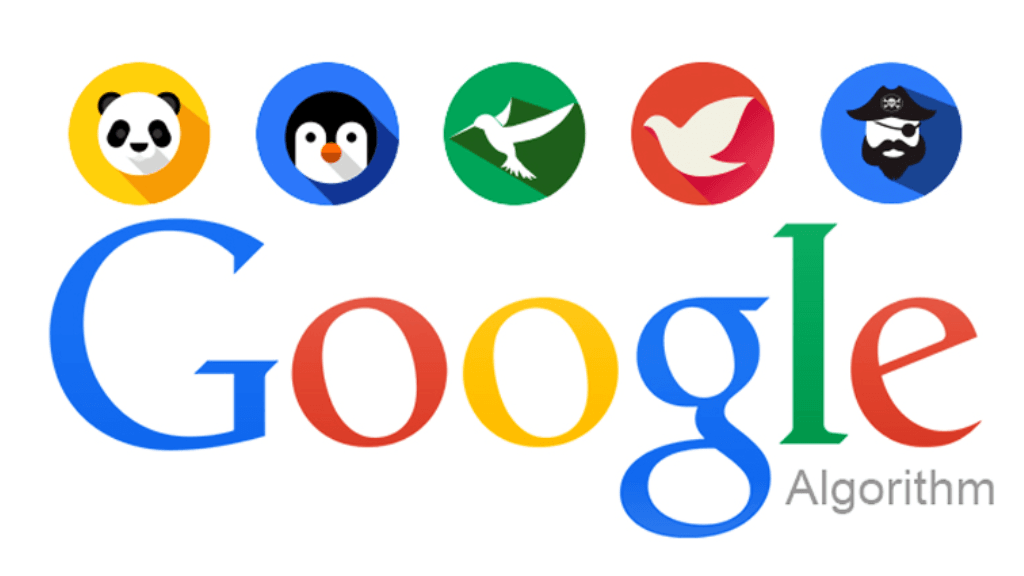
Short answer: Google changes its search algorithm thousands of times a year, but a handful of major updates reshaped SEO: Panda (2011) targeted thin content, Penguin (2012) targeted spammy links, Hummingbird (2013) and BERT (2019) improved how Google understands meaning, and the helpful content and core updates since 2022 reward useful, people-first content.
Right, grab a cold one and settle in because we’re going to have a real chat about Google’s algorithm updates. We are telling you, knowing how Google’s brain operates is like knowing which horses to bet on at Flemington – it’s the difference between being a legend and being well and truly cooked.
See, each time Google messes with their algorithm, it’s as if they’re playing musical chairs with the whole internet. Some sites end up sitting pretty at the top, and others get booted quicker than you can say “fair dinkum.” This tale we’re weaving will walk you through each of the big shake-ups from 2003 through to 2026, and more importantly, how to ensure your website doesn’t get the axe.
Why Google Algorithm Updates Matter in SEO (Or: Why This Stuff Actually Matters, Mate)
Look, Google’s got one job – serve up the best, most reliable answers fast. To pull this off, they’re constantly mucking about under the bonnet, rolling out thousands of tiny changes each year, plus those big whopper updates that make everyone in SEO land absolutely lose their marbles.
Here’s why these updates are more crucial than your morning long black:
Impact Rankings and Traffic – One minute you’re cruising along getting decent traffic, next minute – WHAM! – your website’s ranking has dropped sharply and unexpectedly. Get this – industry trackers reported significant ranking volatility across a large share of websites following those 2024 core updates — among the more disruptive core updates on record.
Fight Spam and Low-Quality Sites – Google’s essentially the web’s security guard, always booting out suspicious sites left and right. Their SpamBrain system (I kid you not, that’s what they actually call it) nabbed nearly six times more spam in 2021 than in 2020.
Reward Quality and User Experience – These days, Google’s all about E-E-A-T – Experience, Expertise, Authoritativeness, and Trust. It’s not just about what you reckon you know, but actually proving you know your stuff and aren’t just some bloke with a laptop trying to wing it.
Drive Industry Change – Each refresh compels us SEO mob to change faster than the blink of an eye. The days of attempting to pull the wool over Google’s eyes are over – now it’s all about delivering real value to punters. The great thing about following this timeline is you can see which strategies worked well (helpful content, clean website organisation, real expertise) and which ones failed quickly (overusing keywords, bad linking practices, low-quality content websites).
A Complete Timeline of Major Google Algorithm Updates
Right-o, buckle up because we’re about to take a proper trip down memory lane. Each update’s like a chapter in Google’s life story – some are more dramatic than a Home and Away cliffhanger, but they all tell a tale.
2003 – Florida Update
Date: November 16, 2003
Target: Keyword stuffing, link farms, shady SEO practices
Impact: This was the first serious penalty attempt by Google on spring cleaning, and it came down like a cyclone over the Christmas season of shopping
What Changed: Before Florida, SEO had no rules – you could stuff your content with as many keywords as possible and get links very quickly and easily.
Websites were ranking purely by taking rubbish rather than actually helping anyone.
The Florida update was Google saying, “Right, enough mucking about!” It went straight after black-hat methods and made keyword spam useless. Heaps of innocent retailers got caught in the crossfire just days before Christmas – some businesses literally went belly-up overnight. It was absolutely brutal, mate.
SEO Shift: This update taught everyone that natural keyword use wasn’t just a nice-to-have – it was essential. Quality links came to be worth more than their weight in gold as opposed to quantity, and astute businesses learned not to place all their eggs in the Google basket. The backlash was so massive that Google assured them that they’d never release major updates prior to holidays again.
2004 – Austin & Brandy Updates
Austin (January 2004):
Target: Sneaky on-page tricks, meta-tag abuse, hidden text
Impact: This update was Google putting on a pair of shades and suddenly seeing all the dirty tricks sites were up to – white text on white backgrounds (you sneaky devils!), teeny-tiny font sizes, and meta-tag stuffing galore.
Brandy (February 2004):
Target: Index expansion, launch of Latent Semantic Indexing (LSI)
Impact: This was a game changer! Brandy introduced LSI technology that could really “get” context and connections among words. It was as if Google suddenly became able to read between the lines rather than simply counting the number of times you repeated “cheap widgets.”
SEO Shift: Content developers needed to begin thinking in terms beyond merely stuffing keywords onto pages like sardines in a can. It became about topical authority and actually being sensible to human beings. Link building moved away from “get as many links as humanly possible” towards “get contextual, relevant links that won’t make you appear like a galah.”
2005 – Bourbon & Big Daddy Updates
Bourbon (May 2005):
Target: Duplicate content, non-canonical URLs
Impact: Google started to seriously penalise duplicate content. It was like having someone who always points out when you’re telling the same story over and over again.
Big Daddy (2005-2006):
Target: Canonicalisation infrastructure overhaul, better crawling
Impact: This was Google’s spring clean – a wholesale infrastructure shake-up that cleaned up the way they dealt with redirects, duplicate content, and site architecture. Tidy housekeeping, if you will.
SEO Shift: Clean URL structures became just as significant as having a clean ute. Canonical tags became as serious, and correct redirects are important. Basic tech SEO principles began being as significant as having good content – you had to have both to make it work.
2010 – Caffeine Update
Date: June 2010
Target: Speed of indexing and freshness – 50% fresher results
Effect: Google rewrote their indexing system from scratch, shifting from batch-updating every couple of weeks to continuous real-time indexing.
Technical Advancement: Prior to Caffeine, Google’s indexing was akin to having the newspaper arrive once per week. Post-Caffeine, it was more like a real-time news scroll – pages were indexed and appearing in search within seconds of publication. Fair dinkum!
SEO Shift: Real-time content became absolute gold. News sites, bloggers, and brands that could publish quickly gained a massive leg-up on the competition. Site speed and crawl efficiency became crucial because Google could now process content faster than ever before.
2011 – Panda Update
Date: February 2011
Target: Thin content, duplicate content, content farms
Impact: This was one of the biggest game changers in Google’s entire history. Panda fundamentally rewrote the rules on what constitutes quality content.
Content Quality Revolution: Panda specifically went after “content farms” – those websites churning out absolute rubbish content rapidly, designed purely to attract clicks rather than help anyone. The algorithm brought in a site-wide quality classifier that could absolutely tank entire websites based on overall content quality.
Quality Factors Evaluated: Panda assessed content based on about 23 essential quality questions, including whether content provides unique value, demonstrates genuine expertise, whether users would actually trust the information, and if content satisfies what people are actually looking for.
SEO Shift: Content depth, originality, and user engagement metrics (time on page, bounce rate) became absolutely crucial. Publishers shifted from “pump out as much content as humanly possible” to “create fewer, but much better pieces.” It was quality over quantity, and the internet became a better place for everyone.
2012 – Penguin Update
Date: April 2012
Target: Dodgy link profiles, over-optimised anchor text, link schemes
Impact: Penguin fundamentally changed link building by absolutely hammering websites with spammy or manipulative backlink profiles.
Link Quality Focus: This update identified websites with mountains of poor-quality links and applied penalties that could completely destroy search rankings. Penguin operated as a page-specific filter that could affect entire websites if it detected link manipulation – no mucking about.
Specific Violations Targeted:
Link schemes – Buying, developing, or acquiring backlinks from dodgy or completely unrelated websites
Keyword stuffing – Unnaturally repeating keywords in content and anchor text like a broken record
Over-optimisation – Going completely overboard with exact-match anchor text in backlink profiles.
SEO Shift – The industry moved toward white-hat link building, focusing on earning high-authority links through creating genuinely valuable content. Link disavowal tools became as essential as sunscreen at Bondi, and comprehensive backlink audits became standard practice for anyone serious about SEO.
2013 – Hummingbird Update
Date: September 26, 2013
Target: Natural language processing, semantic search, conversational queries
Impact: This was the most dramatic algorithm change since 2001, representing a complete shift toward understanding search intent rather than just playing keyword bingo.
Semantic Search Revolution: Hummingbird marked the beginning of Google actually understanding what people meant, not just what they typed. It was like Google finally learned to have a proper conversation instead of just playing twenty questions with individual words.
Key Innovations:
Conversational search processing – Ability to handle longer, more natural queries (like how you’d actually ask a mate)
Entity recognition – Better understanding of people, places, and things mentioned in searches
Context analysis – Looking at entire search queries rather than just individual terms
SEO Shift – Content creators began optimising for topics and user intent rather than specific keywords. Long-tail keyword strategies gained serious importance, and content needed to answer complete questions rather than just match search terms. It was about being genuinely helpful, not just being found.
2015 – Mobilegeddon & RankBrain
Mobilegeddon (April 21, 2015):
Target – Mobile usability as a ranking factor
Impact – Made mobile-friendliness a confirmed ranking signal, marking the beginning of mobile-first thinking across the web.
Mobile-First Revolution – This update gave preference to mobile-friendly sites in mobile search results, recognising that mobile device usage was overtaking desktop faster than you could say “iPhone.” By 2015, mobile searches were already trending toward becoming the majority – and Google wasn’t mucking about.
RankBrain (October 26, 2015):
Target – Machine learning for interpreting 15%+ of never-before-seen queries
Impact – Introduction of AI to Google’s ranking algorithm, making it the third most important ranking factor after links and content.
AI Integration – RankBrain used machine learning to guess what words or phrases might have similar meanings when encountering unfamiliar queries. It helped Google better understand search queries and deliver more relevant search results. It was particularly effective at interpreting complex or ambiguous search terms and improving search results for queries it had never seen before. In layman’s terms, it was like having that really clever mate who could understand what you meant even when you couldn’t articulate it properly after a few too many tinnies.
Performance – Get this – RankBrain could guess what other parts of Google’s algorithm would pick as the top result 80% of the time, compared to 70% for actual human search engineers. The machine was becoming smarter than its creators!
SEO Shift – Mobile responsive design became absolutely non-negotiable. Content optimisation shifted toward user intent and engagement signals, with less emphasis on exact keyword matching and more focus on comprehensive topic coverage that actually helped people.
2018 – Medic Update
Date: August 1, 2018
Target: YMYL (Your Money or Your Life) pages with weak E-A-T signals
Impact: This update absolutely hammered websites in health, finance, legal, and medical verticals by emphasising expertise, authoritativeness, and trustworthiness.
YMYL Content Standards: The update specifically targeted content that could impact users’ finances, health, safety, or well-being. Such content now requires demonstrable expertise from qualified professionals to maintain rankings. Google wasn’t taking any chances when it came to potentially life-affecting information – fair enough, too!
E-A-T Emphasis: Google’s search quality rater guidelines became absolutely crucial for understanding ranking factors:
Expertise: Content creators needed verifiable qualifications and genuine knowledge in their field
Authoritativeness: Websites needed recognition as credible sources within their industry
Trustworthiness: Content and websites needed to demonstrate reliability and accuracy.
SEO Shift: Author bios with proper credentials became essential, third-party citations gained massive importance, expert reviews became valuable as gold, and websites invested heavily in building topical authority through comprehensive, well-sourced content. It was like Google demanding to see your qualifications before letting you give life advice.
2019–2026 – Core Updates Era
Frequency: Multiple broad core updates per year (typically 3-4 annually)
Target: Broad quality reassessments with no specific technical focus
Impact: Unlike previous named updates, core updates evaluate overall content quality and user satisfaction across all websites – no specific targets, just general quality checks.
Core Update Philosophy: Google describes these as attempts to reward previously under-rewarded content rather than penalise specific dodgy practices. They consistently advise focusing on creating great content rather than seeking technical quick fixes – basically, “just be better!”
Recent Major Core Updates:
May 2026 Core Update – Second core update of 2026, rolling out 21 May to 2 June 2026. Google again gave no specific technical guidance beyond its standard advice to keep producing satisfying, people-first content; Search Engine Land reported real ranking volatility through the rollout, including fluctuations on 23 May, 30 May, and in the final 24 hours before completion.
March 2026 Core Update – First core update of 2026, rolling out 27 March to 8 April 2026. As with most core updates, Google issued no companion guidance on specific content types affected, describing it only as a regular update to better surface relevant, satisfying content.
March 2025 – Focused on E-E-A-T principles, reducing low-value AI content, and prioritising interactive media
November 2024 – Enhanced search result quality by promoting genuinely useful content
August 2024 – Promoted high-quality content while giving the boot to low-value SEO content
Recovery Strategies – Core update recovery requires holistic improvements rather than quick fixes – content depth, user experience optimisation, E-E-A-T signal strengthening, and patient monitoring of performance metrics. It’s like getting fit – there’s no magic pill, just consistent good habits and patience.
2020 – BERT Update
Date: October 2019 (initially 10% of queries), expanded throughout 2020
Target: Deep contextual understanding of natural language
Impact: Absolutely revolutionised how Google understands search queries by analysing context and relationships between words rather than just processing individual terms.
Natural Language Processing Breakthrough: BERT (Bidirectional Encoder Representations from Transformers – bit of a mouthful, eh?) enabled Google to understand nuanced language patterns, including the importance of stop words like “the,” “and,” and “without” that were previously ignored. It was like Google finally learned proper grammar and context!
Technical Capabilities:
Bidirectional context analysis – Understanding words based on all surrounding words, not just what comes before
Passage-level relevance – Ability to identify the most relevant sections within longer content pieces
Query refinement – Much better interpretation of complex, conversational search queries
Current Impact – By 2025, BERT influences nearly all English searches, making natural writing and comprehensive question-answering absolutely essential for rankings.
SEO Shift – Content optimisation moved toward natural language and comprehensive topic coverage. Writers focused on answering complete questions and providing contextual depth rather than keyword optimisation. It was about writing like a human for humans, not like a robot trying to please other robots.
2022 – Helpful Content Update
Date: August 25, 2022
Target: Content written for search engines rather than actual users
Impact: Introduced a site-wide classifier that could demote entire websites based on the proportion of unhelpful, search-engine-focused content.
People-First Content Philosophy: The update specifically targeted content created primarily to attract search traffic rather than genuinely help users. Sites with high percentages of unhelpful content could see site-wide ranking decreases. Google was basically saying, “Stop writing for me, start writing for real people”
Quality Evaluation Criteria:
Audience Focus – Content targeted toward specific audiences with clear, helpful purposes
First-hand Expertise – Demonstrated personal experience or specialised knowledge (not just rehashed stuff from Wikipedia)
Satisfaction Guarantee – Content that leaves users feeling they actually learned something valuable
Natural Language – Writing that flows naturally rather than being stuffed with keywords like a Christmas turkey
Long-term Impact – This update reinforced Google’s direction toward rewarding authentic, user-focused content over SEO-optimised material designed primarily for search engines.
SEO Shift – Content creators invested heavily in first-hand expertise, niche focus, and user satisfaction signals, including scroll depth and return-to-SERP rates. The update marked a clear move away from scaled content production toward quality and authenticity – about time too!
2023–2026 – Real-Time Spam & AI Overviews Era
SpamBrain Evolution (2021-ongoing):
Target – Real-time spam detection and prevention
Impact – Continuous improvement of AI-based spam detection, keeping over 99% of searches spam-free – pretty impressive stuff!
AI Overviews (May 2024):
Target – Providing AI-generated summaries at the top of search results
Impact – Completely transformed the search experience by providing immediate answers with supporting citations, affecting click-through rates to traditional organic results.
Site Reputation Abuse Update (May 2024):
Target – Third-party content designed to manipulate search rankings.
Impact – Targeted “parasite SEO” where authoritative sites host completely unrelated third-party content to exploit their ranking signals – pretty sneaky stuff that needed shutting down.
Target – General spam-policy violations. Google was explicit that this update did not target link spam specifically.
Impact – Rolled out over roughly three days (18–21 August 2026). Google described it as a normal, global spam update and pointed affected sites back to its spam policies, noting recovery can take months with further refreshes planned.
Target – General spam-policy enforcement, with a notably longer rollout than previous spam updates.
Impact – Announced 24 September 2026 and rolled out in two phases (25–27 September, then 30 September–1 October) over roughly two weeks rather than the usual couple of days – noticeably slower than Google’s typical spam-update cadence (including its own August update) – with reported knock-on volatility in Discover and News traffic alongside it.
AI Overview Trends (most recent published data, 2025):
AI Overview Prevalence – Appearing across a large and growing share of non-logged sessions, with most of those showing a “Show more” link
Source Attribution – Industry reporting consistently observes AI Overview citations leaning toward pages that already rank well in traditional organic results – a reminder that classic on-page and technical SEO still underpins AI-search visibility, rather than being replaced by it.
Content Implications – Real need for structured, authoritative content that can be effectively cited in AI summaries
SEO Shift – Transparent sourcing became absolutely crucial, multimedia trust signals gained massive importance, and reputation management across web entities became essential for maintaining search visibility.
Visual Timeline – Google Algorithm Updates
| Year | Update | Focus Area | Primary Impact | Key SEO Lesson |
| 2003 | Florida | Spam links & keywords | Killed keyword stuffing, link farms | Quality over quantity in optimisation |
| 2004 | Austin | Hidden text/meta abuse | Penalised invisible text, meta stuffing | Transparency in on-page optimisation |
| 2004 | Brandy | Semantic indexing (LSI) | Thematic relevance over keyword density | Topical authority building |
| 2005 | Bourbon | Duplicate content | Filtered near-duplicates | Original content creation |
| 2010 | Caffeine | Indexing speed | 50% fresher results, real-time indexing | Content freshness and speed |
| 2011 | Panda | Content quality | Demoted thin content, content farms | In-depth, valuable content |
| 2012 | Penguin | Link quality | Penalised unnatural backlinks | Ethical link-building practices |
| 2013 | Hummingbird | Semantic NLP | Conversational search understanding | Intent-based content optimisation |
| 2015 | Mobilegeddon | Mobile UX | Boosted mobile-friendly sites | Mobile-first design approach |
| 2015 | RankBrain | AI relevance | Intent interpretation for 15% of queries | User experience optimisation |
| 2018 | Medic | E-A-T, YMYL | Expertise requirements for sensitive topics | Authority and trust building |
| 2020 | BERT | Contextual NLP | Passage-level relevance understanding | Natural language content |
| 2022 | Helpful content | People-first approach | Site-wide unhelpful content classifier | User-focused content creation |
| 2024-25 | AI overviews | Generative AI summaries | AI-powered search result presentation | Structured, citable content |
| 2026 | March & May Core Updates | Broad quality reassessment | Two broad rollouts (12-13 days each), no specific guidance issued | Consistent core-update cadence continues |
| 2026 | August & September Spam Updates | Spam policy enforcement | August excluded link spam; September ran a longer, two-phase rollout | Spam enforcement keeps evolving in scope and cadence |
How to Future-Proof Your SEO Strategy Against Google Updates (Your Survival Guide, Mate)
Right, now that you know the whole history, let’s talk about how to bulletproof your website against future updates. Think of this as your insurance policy against getting caught with your pants down when Google decides to shake things up again.

Build Exceptional, Original Content
Depth and Comprehensiveness: Create content that thoroughly answers user queries with original insights, proper research, and genuine analysis. Don’t just skim the surface – dive deep and explore every nook and cranny. Aim for content that provides value way beyond what your competitors are offering.
Keyword Integration: Use your primary keyword naturally throughout your content – no more than 6 times per 2,000–2,500 words, mate. It should flow as naturally as a conversation at the local pub, not sound like a broken record. Focus on semantic relevance and topic clusters rather than just hammering the same exact phrase over and over.
Freshness and Updates: Regularly refresh your existing content with new information, updated statistics, and current examples. Treat your content like a garden – it needs regular watering and weeding to stay healthy and vibrant. Stale content is about as useful as yesterday’s fish and chips.
Optimise for User Experience (UX)
Core Web Vitals: Ensure fast loading times (LCP), quick interactivity (FID), and visual stability (CLS) to meet Google’s page experience requirements. Your website should load at the blink of an eye – else, people will bugger off to your competitors.
Mobile-First Design: With mobile searches absolutely dominating the landscape, responsive design that works seamlessly across all devices isn’t just nice to have – it’s essential. Your site needs to work as well on a phone as it does on a massive desktop monitor.
Intuitive Navigation: Create a clear site architecture with logical internal linking and navigation that doesn’t require a GPS to figure out. Users should be able to find what they’re looking for without complexities.
Strengthen E-E-A-T Signals
Author Credentials: Display proper author bios with relevant qualifications, experience, and expertise, especially for YMYL content. Show your credentials like you’re introducing yourself at a professional networking event – people need to know you’re not just some random having a crack.
Source Citations: Link to authoritative sources, scientific studies, and reputable publications to back up your claims. Support your statements like you’re writing a uni essay – references absolutely matter, and Google’s paying attention to who you’re citing.
Trust Indicators: Secure positive reviews, earn media mentions, and build recognition as a credible source within your industry. Build your reputation like you’re running for local council – every positive mention and endorsement counts toward your credibility.
First-Hand Experience: Demonstrate personal involvement or direct experience with the topics you’re covering. Don’t just write about something you’ve read on Wikipedia – actually experience it, use it, test it, and share those genuine insights with your audience.
Monitor Performance & Adapt
Traffic Analysis: Use Google Analytics and Search Console to identify sudden changes in traffic, rankings, and user engagement metrics. These are the vital signs that let you know when something’s not right.
Algorithm Tracking: Stay informed about Google’s official announcements, search volatility tools (MozCast, SEMrush Sensor), and industry news. Knowledge is power, mate, and staying informed is half the battle in this SEO game.
Continuous Improvement: Regularly audit your content quality, update outdated information, and optimise based on actual performance data rather than just waiting around for the next algorithm update. Be proactive, not reactive – it’s much easier to stay ahead than to catch up.
Diversify Traffic Sources
Multi-Channel Strategy: Balance organic search with email marketing, social media, direct traffic, and paid advertising. Don’t put all your eggs in the Google basket – spread the risk like a savvy investor with a diversified portfolio.
Platform Diversification: Build presence across multiple search engines and platforms to cushion potential impacts from Google-specific changes. Bing might not be as popular as Google, but it’s still sending decent traffic to smart marketers who don’t ignore it.
Tools to Track Google Algorithm Updates (Your Early Warning System)
Official Google Sources:
Google Search Central Blog – First-party confirmations and guidance on major updates – straight from the horse’s mouth, no interpretation needed
Google Search Status Dashboard – Real-time information about ongoing updates and any issues Google’s experiencing
Google Search Console – Direct notifications about manual actions and performance changes affecting your site.
Third-Party Monitoring Tools:
MozCast – Daily “weather report” showing SERP volatility levels across different industries – brilliant for spotting when things are getting shaky
SEMrush Sensor – Industry-specific turbulence metrics and historical volatility data
Algoroo – Daily SERP flux measurements with proper historical tracking capabilities
Rank Ranger – Comprehensive SERP features tracking with visual change documentation.
Advanced Monitoring:
SERP tracking tools – Monitor your specific keyword rankings across different locations and devices
Traffic correlation analysis – Compare your traffic changes with known update rollout periods
Competitor analysis – Track how algorithm changes are affecting similar sites in your industry – sometimes you can learn as much from their pain as your own
FAQs – Google Algorithm Update Timeline
- Do Google updates actually help with SEO?
Too right they do! Sites that prioritise helpful, authoritative content consistently gain visibility after major updates. However, updates can absolutely hammer sites using outdated or dodgy SEO tactics. It’s like natural selection for websites – the fittest survive and thrive, while the weak get weeded out.
2. What’s the difference between core updates and named updates?
Core updates are broad reassessments of Google’s overall ranking systems that happen several times per year – like general health check-ups. Named updates (like Penguin or Panda) target specific issues, such as link spam or content quality – more like targeted treatments for specific problems.
3. What should I do after a Google core update hits?
Conduct a comprehensive content audit focusing on depth, user experience, and E-E-A-T signals. Address anything pages, improve your topical authority, and then wait patiently for the next refresh – recovery often takes weeks or months, so don’t panic and make drastic changes straight away.
4. How can I check if my site got walloped by a Google update?
Compare your Google Search Console clicks and impressions before and after confirmed update dates. Cross-reference the timing with Google’s official announcements and check SERP volatility tools for matching turbulence patterns. If your traffic dropped significantly around the same time as a known update, chances are you’ve been affected.
5. Why are Google algorithm updates so important for SEO?
Updates shape the entire search landscape by defining which strategies work and which become about as useful as a chocolate teapot. Understanding update patterns helps predict future changes and build sustainable SEO strategies that won’t leave you high and dry.
6. How frequently does Google actually update its algorithm?
Google makes approximately 3,200+ changes per year – that’s about 9 per day, mate! But they only announce the major updates that significantly impact search results. Most changes are minor refinements that go completely unnoticed, like fine-tuning a car engine.
7. Has Google released any major updates in 2026?
Too right – four confirmed so far, and Google hasn’t let up. Two broad core updates rolled through (March 27 – April 8, and May 21 – June 2), both the usual “just make good content, mate” affair with no specific guidance beyond rewarding satisfying, people-first pages. Two spam updates followed on their heels (August 18–21, which explicitly steered clear of link spam, and a slower, two-phase September job running from the 25th through October 1st). The lesson from 2003 through 2026 hasn’t budged an inch: broad quality and spam-policy compliance, not short-term tricks, is what survives each refresh.
Final Thoughts (The Bottom Line)
Google’s algorithm timeline tells one clear story: every single update pushes SEO closer to genuine user value and further away from dodgy manipulation tactics. From Florida’s war on keyword stuffing to BERT’s natural language understanding to today’s AI Overviews, each change reinforces the same consistent message – create exceptional content for real people, build authentic authority, and prioritise user experience above absolutely everything else.
The websites that absolutely smash it through algorithm updates aren’t the ones trying to game the system – they’re the ones genuinely serving their audience with valuable, helpful content. They demonstrate real expertise, provide comprehensive answers to user questions, maintain excellent technical performance, and consistently put user needs first. These core principles have remained rock-solid even as specific ranking factors have evolved and changed.
As we move further into 2026 and beyond, the trend toward AI-powered search experiences will only accelerate faster than a V8 Supercar at Bathurst. However, the fundamental requirement for high-quality, authoritative, user-focused content will only get stronger. Sites that invest in creating real expertise, open sourcing, and honest value creation won’t just endure future refreshes – they’ll outrightly own their competition.
Bookmark this guide, return to it after every big rollout, and use past lessons to construct an evergreen strategy that remains bulletproof no matter what the next thing Google releases. The algorithm may evolve quicker than Melbourne weather, but the concept of serving users with brilliant content is as ageless as a quality meat pie and sauce.
Don’t forget, mate – Google’s not really out to get you. They simply want to deliver their users the best results possible, and good on ’em, too. If you’re really helping people and giving them value, you’re already playing the right game. Carry on doing that, and keep an ear out for the changes, and you’ll be right as rain. No problem!
Prefer to talk? Book a time with Richard or call 1800 512 124.
Google Algorithm Updates Timeline: The Changes That Shaped SEO